
Top Twelve Most Common Training Mistakes Made by New German Shepherd Owners
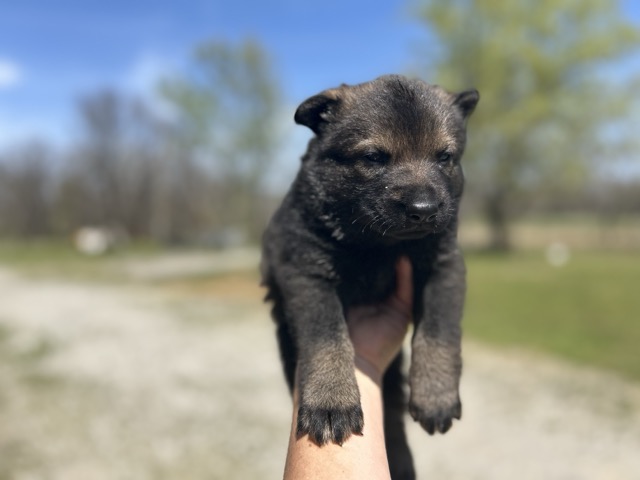
Many trainers rightfully contend German Shepherd Dogs (GSDs) are one of the more biddable (trainable) breeds in the world. More than any other breed, they are the most commonly chosen for protection training. Widely considered to be good family protection dogs, German Shepherd puppies are also idea prospects for law enforcement, military, service work, and search and rescue. With that said, these same characteristics that make GSDs highly trainable— in skilled hands— can also present significant challenges for inexperienced owners. Hoping for a well trained obedience or protection dog, your puppy will need purposeful engagement, consistent structure, and early intervention if it to mature into something special. In many cases, new owners are unprepared for the demands of dog training. Missteps during early development can lead to behavioral instability. These mis-steps can often compound into reactivity, or even aggression. This article identifies twelve common training mistakes made by new German Shepherd owners. Reviewing this peer reviewed research should help new GSD puppy owners avoid some of these more common mistakes.
Ten Common Training Mistakes
The first major mistake is waiting too long to start structured training. New owners often assume formal training should not begin after the puppy is six months old. Such a decision fails to recognize the critical developmental patters that occur during the early formative months. Research shows the optimal window for socialization and early learning begins around three weeks and continues until approximately fourteen weeks of age. During this phase, the puppy’s brain is particularly receptive to forming social bonds. It is during this time the puppy will radically respond to learning environmental cues (Scott and Fuller 1965). Failing to expose a German Shepherd puppy to basic commands, household rules, and mild external stimuli during this time can result in entrenched behaviors that can take a fair amount of time to undo once the puppy has passed that six month mark.
Closely related is the second error: inadequate socialization. German Shepherds are naturally protective. They are often cautious with unfamiliar people or environments. Without sufficient and positive exposure to a wide variety of experiences—such as different people, dogs, sounds, surfaces, and settings—they are at risk for developing neophobia, generalized anxiety, and fear-based aggression. Controlled exposure to new environments, people, and animals in a positive, reward-based framework during early life has been shown to reduce fear responses later in adulthood (Batt et al. 2008). New owners often wait until their dogs are fully vaccinated to begin socializing them, unaware that early underexposure may pose a greater long-term behavioral threat than the risk of disease.
A third common mistake is the improper use of punishment in training. When punishment is overused puppies can become reactive or afraid. While some trainers attempt to correct undesirable behaviors using harsh leash corrections, yelling, or physical manipulation, studies show such actions are rarely helpful when used with any kind of consistency. Research would suggest these aversive methods tend towards increased stress responses in the puppy along with elevated cortisol levels. The end result are often reduced learning outcomes (Schilder and van der Borg 2004). To make matters worse, excessive forms of punishment can erode trust bonds between dog and handler. This can be especially significant when the puppy goes through protection training. It is imperative a dog in protection training fully trust its handler and not be reactive or fearful. Effective correction must be immediate, non-threatening, and always paired with guidance toward the desired behavior. Positive reinforcement, when used with clarity and consistency, is associated with stronger retention and fewer fear-related behaviors (Hiby, Rooney, and Bradshaw 2004).
Fourth is inconsistency in rules and commands. GSDs thrive in environments where expectations are predictable. Predictable training provide training where expectations and consequences are clear. Inconsistent use of commands, enforcement of rules, or fluctuating access to rewards can cause frustration, anxiety, and confusion. Canine cognitive studies have shown that consistency in reinforcement schedules leads to improved learning. Improved learning then leads to more stable behavior patterns (Bray, Sammel, and Serpell 2017). Owners who allow the dog on the furniture one day but scold them the next undermine their own authority. Fail to act with consistency is a failure provide the clear structure so many German Shepherd puppies crave.
Another frequent mistake is underestimating the emotional and physical needs of the breed. German Shepherds were bred for intense tasks. Well-bred dogs thrive when challenged with tracking, protection, and obedience work. As active dogs, they require significant daily physical exercise and mental stimulation. Simply providing a backyard or a daily walk is rarely insufficient— at least on regular basis. Without meaningful work or activity, these dogs are prone to developing behavioral disorders. These kinds of disorders can include obsessive-compulsive behaviors, excessive vocalization, or destruction of property (Luescher and Reisner 2008). Activities like scent work, obedience drills, or interactive games that require problem solving can help satisfy their working instincts. Engaging both mind and body can go a long way towards reduce behavioral frustration in your new German Shepherd puppy.
The sixth error is overuse of repetitive commands without first teaching the puppy the meaning of the command. Some novice owners/trainers repeatedly issue commands like “sit” or “come” without first ensuring the dog understands the command. Repetition without reinforcement dilutes the meaning of the cue and teaches the dog that compliance is optional. A 2021 study in Animal Cognition found that working-line dogs, including GSDs, respond most effectively to commands that are clearly paired with immediate reinforcement and delivered within a structured training context (Bray et al. 2021). Rather than repeating commands the puppy may not underderstand, trainers should focus on setting up scenarios in which success is likely, followed by immediate rewards. In so doing, this kind of training scenario make the behavior worthwhile for the dog.
Seventh is allowing the dog to rehearse undesirable behaviors. Behavior that is practiced becomes stronger over time, regardless of whether it is desirable or not. New owners often fail to interrupt problem behaviors (behaviors such as barking at passersby, jumping on guests, or chewing furniture). Many new owners simply assume the dog will “just grow out of it.” This rarely happens in real life. More often than not, these actions become reinforced by their own internal or environmental rewards. Neuroscience research into reward pathways in dogs has demonstrated that even the act of barking or chasing can activate dopaminergic reinforcement systems (Berns et al. 2015). Once established, these behaviors are far more difficult to extinguish, making early intervention critical.
An eighth mistake is neglecting to train and reward calm behavior. Many new GSD owners focus on teaching high-energy activities such as fetch, tug, or protection games, inadvertently rewarding heightened arousal. Without balance, this leads to a dog that remains in an elevated emotional state and struggles with impulse control. Training relaxation behaviors such as settling on a mat, staying calmly in place, or deferring to the handler’s cues helps develop the neurological pathways for self-regulation (Overall 2013). The ability to switch off is just as important for protection dogs as the ability to switch on.
Another issue is premature off-leash freedom. GSDs are fast, agile. They easily distracted during the early stages of training. Allowing them off-leash before they demonstrate consistent recall and handler focus places them at risk of developing independence or ignoring commands altogether. Research confirms that reliability in off-leash situations requires months of consistent reinforcement and staged distraction training (Lord et al. 2009). Premature freedom not only undermines recall training but may lead to dangerous incidents involving wildlife, traffic, or other dogs.
Tenth is the failure to expose the dog to handling and grooming routines. Many GSDs develop aversions to nail trimming, bathing, ear cleaning, and veterinary examinations because these experiences are introduced too late or in a stressful context. Systematic desensitization and counterconditioning during puppyhood has been shown to improve tolerance and reduce resistance during handling procedures (Yin 2009). Owners should integrate gentle, positive exposure to these routines early on to ensure cooperation in adulthood.
The eleventh mistake is an over reliance on food without fading the lure. While food is a powerful motivator, particularly in early learning phases, many owners fail to transition from luring to rewarding. When the food remains visible in the trainer’s hand, the dog learns to follow the treat, not the command. The process of transitioning from a visible lure to a hidden reward—known as reward fading—encourages the dog to perform the behavior reliably regardless of whether food is visible (Fugazza and Miklósi 2014). Without this transition, dogs become overly dependent on food and may refuse to perform when it is absent.
Finally, the twelfth mistake is failure to build engagement and focus. Some novice trainers jump into obedience training without first building a strong relationship or engagement protocol. GSDs thrive when their attention is voluntarily offered, not constantly demanded. Engagement training—where the dog learns that offering eye contact, proximity, or attention to the handler leads to rewards—is critical in the early stages of development. Studies in social cognition indicate that handler-focused engagement predicts success in both obedience and protection sport disciplines (Gácsi et al. 2004). Dogs that are emotionally attuned and responsive to their handler are more reliable in real-world situations where distractions abound.
Having Identified These Common Training Mistakes, Now What?
In conclusion, the German Shepherd Dogs (especially working line German Shepherds from titled lines where dogs in that line have consistently been required to pass IGP exams as a condition of breeding) are a highly biddable breed. Well bred German Shepherds will very often show great potential in protection, service, and companionship roles, but the degree to which they thrive in these contexts often depends on proper training from the outset. New owners often fall into predictable patterns of error—starting too late, using the wrong methods, or ignoring key behavioral principles. These failures often shape the dog’s development in irreversible ways. By understanding and avoiding these twelve common training mistakes, owners can foster a confident, obedient, and mentally stable German Shepherd. In so doing they set their dogs up for success. Proper early training not only shapes the individual dog, but provides a basis for both dog and owners to enjoy one another for years to come. If you have found our page searching for working line German Shepherd puppies for sale, we’d love to help. See our German Shepherd puppies for sale page to see what we currently have available. If you are interested in developing prey drive in your German Shepherd puppy, or finding a good resource where you yourself can get some great outside help on how you yourself can train your own dog more effectively, consider connecting Chris and Bree at www.mydogtrainer.com. Their coursework is spending, $3000 to $5000 per week of training. But for certain, you will learn a ton and come away better equipped as a more effective dog trainer.
Bibliography
Appleby, David L., John W. S. Bradshaw, and Rachel A. Casey. “Relationship Between Aggressive and Avoidance Behaviour by Dogs and Their Experience in the First Six Months of Life.” Veterinary Record 150, no. 14 (2002): 434–438.
Batt, Lisa S., Jacquelyn L. Batt, Nancy Baguley, and Peter McGreevy. “Factors Associated with Success in Guide Dog Training.” Journal of Veterinary Behavior 3, no. 4 (2008): 143–151.
Berns, Gregory S., Andrew M. Brooks, and Mark Spivak. “Scent of the Familiar: An fMRI Study of Canine Brain Responses to Familiar and Unfamiliar Human and Dog Odors.” Behavioural Processes 110 (2015): 37–46.
Bray, Emily E., Audrey E. MacLean, Evan L. Hare, Brian Hare, and Bridgett M. vonHoldt. “The Genetics of Dog Behavior and Human-directed Sociality.” Animal Cognition 24, no. 1 (2021): 13–23.
Bray, Emily E., Mary M. Sammel, and James A. Serpell. “Effects of Maternal Investment, Temperament, and Cognition on Guide Dog Success.” Proceedings of the National Academy of Sciences 114, no. 34 (2017): 9128–9133.
Fugazza, Claudia, and Ádám Miklósi. “Social Learning in Dog Training: The Efficiency of the Do As I Do Method Compared to Shaping/Clicker Training.” Applied Animal Behaviour Science 153 (2014): 53–61.
Gácsi, Márta, József Topál, Ágnes Miklósi, and Vilmos Csányi. “Attachment Behavior of Adult Dogs (Canis familiaris) Living at Rescue Centers: Forming New Bonds.” Journal of Comparative Psychology 115, no. 4 (2001): 423–431.
Hiby, E. F., Nicola J. Rooney, and John W. S. Bradshaw. “Dog Training Methods: Their Use, Effectiveness and Interaction with Behaviour and Welfare.” Animal Welfare 13, no. 1 (2004): 63–69.
Lord, Linda K., Cynthia M. Reider, and Gary L. Podell. “Injuries to Dogs in the Off-Leash Dog Park.” Journal of the American Veterinary Medical Association 235, no. 10 (2009): 1165–1170.
Luescher, Andrew U., and Ilana R. Reisner. “Canine Compulsive Disorders.” Journal of the American Veterinary Medical Association 233, no. 12 (2008): 1904–1910.
Overall, Karen L. Manual of Clinical Behavioral Medicine for Dogs and Cats. St. Louis: Elsevier, 2013.
Schilder, Matthijs B. H., and Joanne A. M. van der Borg. “Training Dogs with the Help of the Shock Collar: Short and Long Term Behavioural Effects.” Applied Animal Behaviour Science 85, no. 3–4 (2004): 319–334.
Scott, John Paul, and John L. Fuller. Genetics and the Social Behavior of the Dog. Chicago: University of Chicago Press, 1965.
Yin, Sophia. Low Stress Handling, Restraint and Behavior Modification of Dogs and Cats: Techniques for Developing Patients Who Love Their Visits. Davis, CA: CattleDog Publishing, 2009.